

KIMUGANDURA ELEPHANT DISPERSAL AREA (ELDA)
2026-2030 Project
Safeguard and important ELDA, protect communities, and catalyse private-land conservation in a rapidly shrinking wild-scape, Laikipia, Kenya
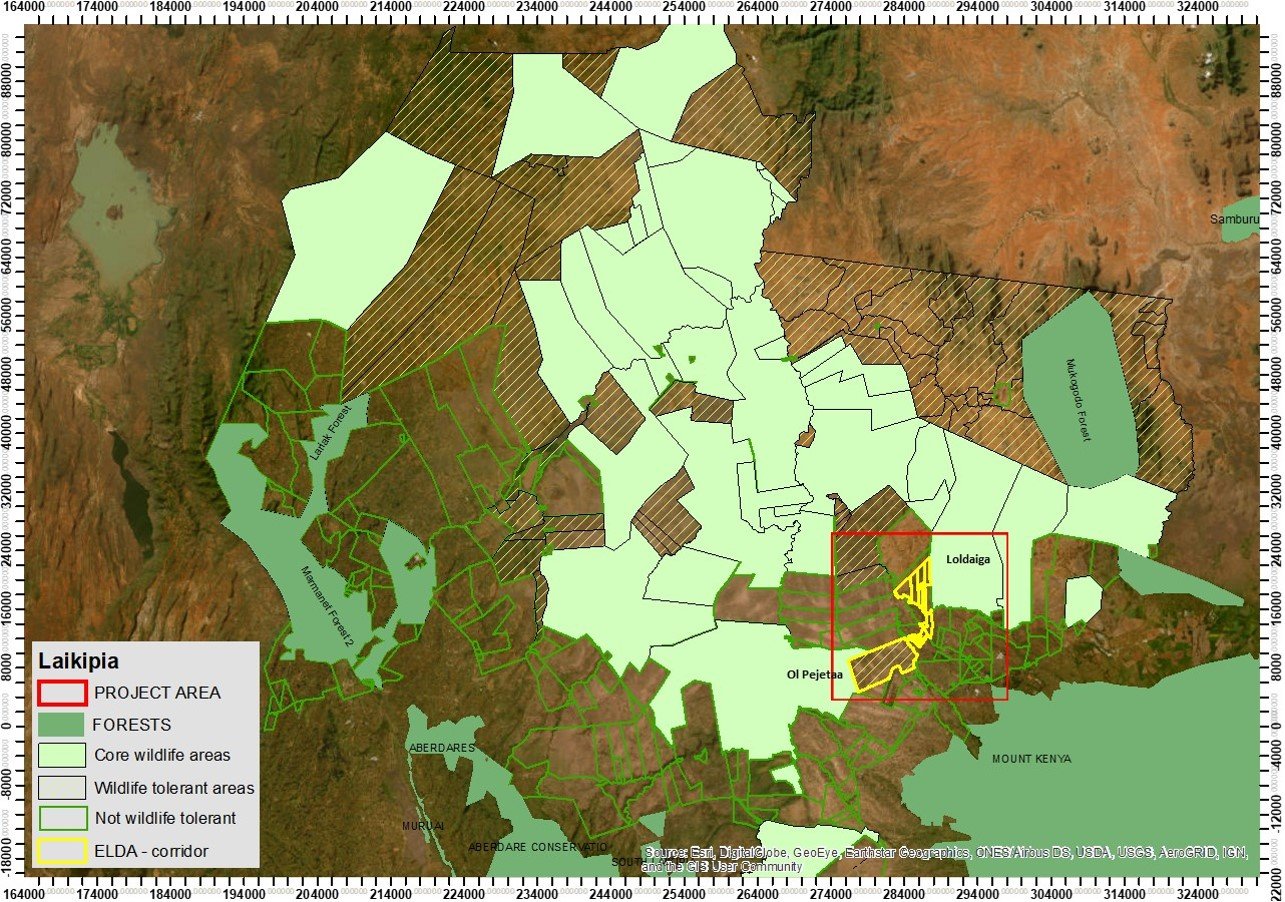
The ELDA (yellow contours) within Laikipia
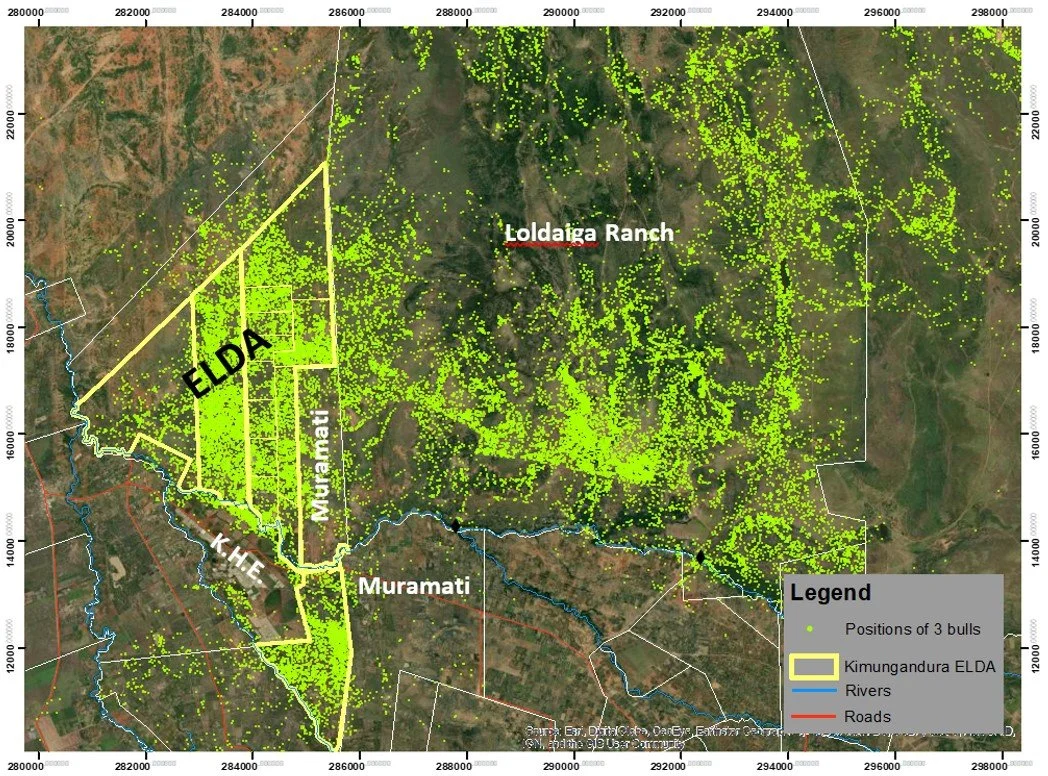
1 year position points of 3 GPS-collared bulls
CHALLENGES
Laikipia is one of Kenya’s most important remaining elephant landscapes—and one of its most threatened. Some 15,000 elephants move across Laikipia, navigating a rapidly fragmenting mosaic of lands with growing numbers of fences, roads, and settlements. Disappearing dispersal areas and intensifying human–elephant conflict (HEC) are the key causes of wildlife decline.
At the heart lies the Kimungandura ELDA - a largely undeveloped, privately owned block of semi-arid land that functions as a critical convergence zone (see Fig 1). Three GPS collared bulls were observed with at least eight other bulls and several breeding herds.
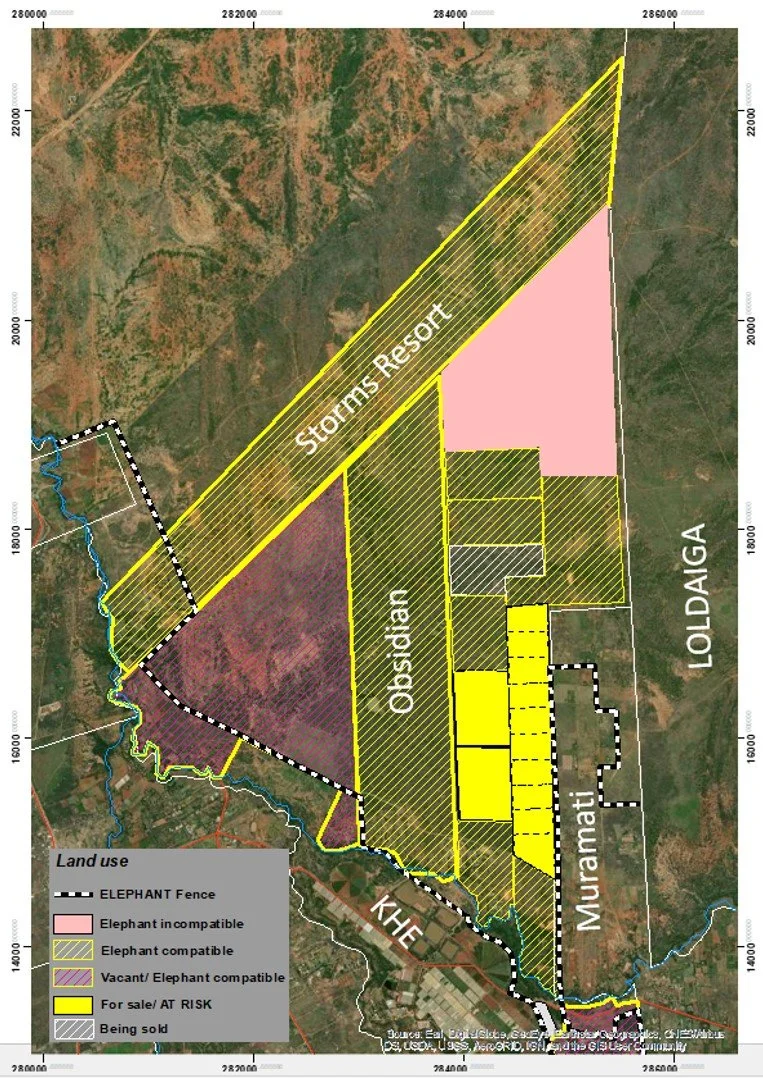
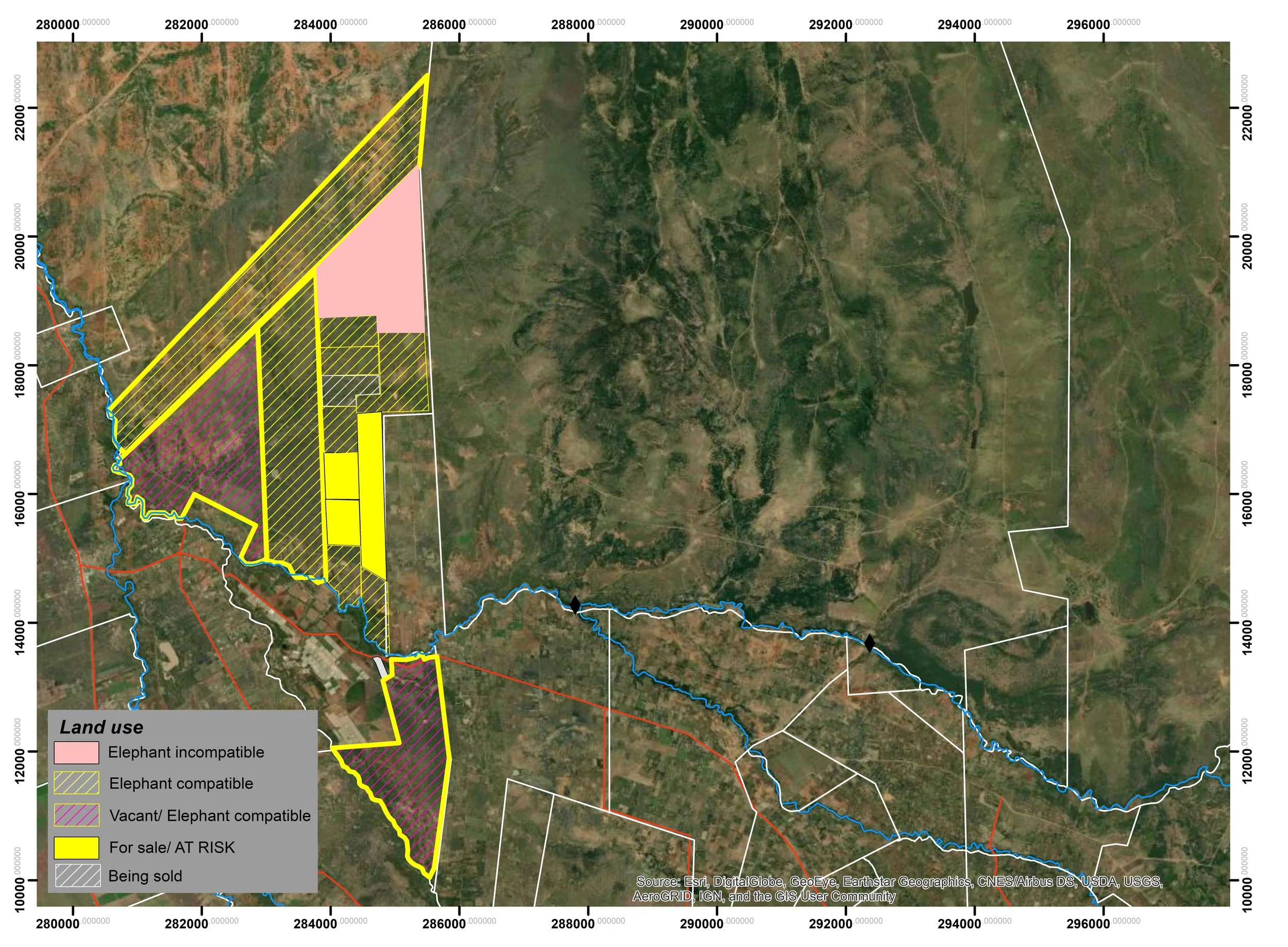
The 2000 acre block in the ELDA, adjacent to Loldaiga ranch is on sale of which (Fig 2):
32% was sold to wildlife-incompatible users
32% was sold to wildlife-compatible users
14% stays with (wildlife compatible) owner
22% (430 acres) is still on sale
The remaining land located along hard agricultural boundaries and containing vital water points, is at imminent risk of conversion to intensive farming or settlement (Fig 2).
If lost, the Kimungandura ELDA cannot be replaced.
This project proposes a time-sensitive, donor-enabled intervention to secure the most critical parcels of land, lock in wildlife-compatible land use, and demonstrate a replicable private-land conservation model that aligns elephant survival, community protection, and long-term economic sustainability.
Fig 3: Proposed division of 230 acre plot in 10 plots of 23 acres and the elephant-proof fence on the Muramati boundary.
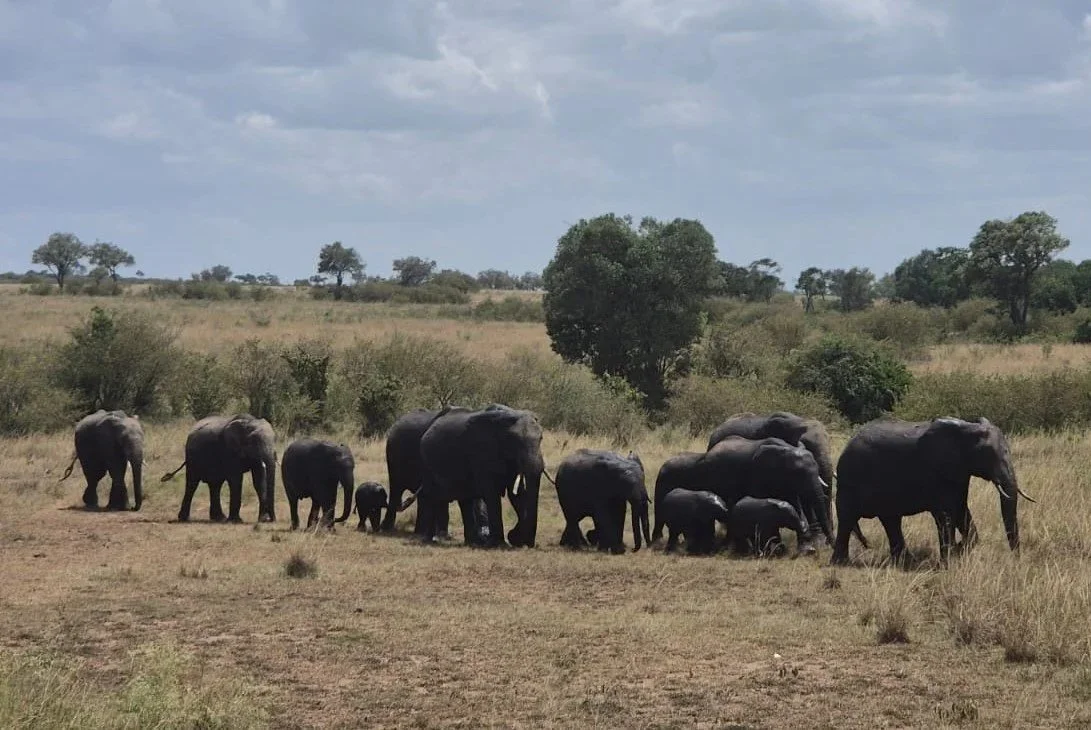
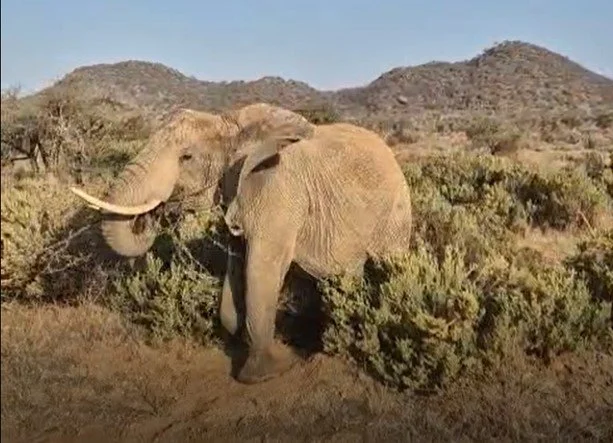
Elephant family group and bull in the Kimugandura ELDA in 2026
Position points of three GPS-collared bulls between September 2024 and 2025 © data by Space For Giants/ Maps by WilderThings
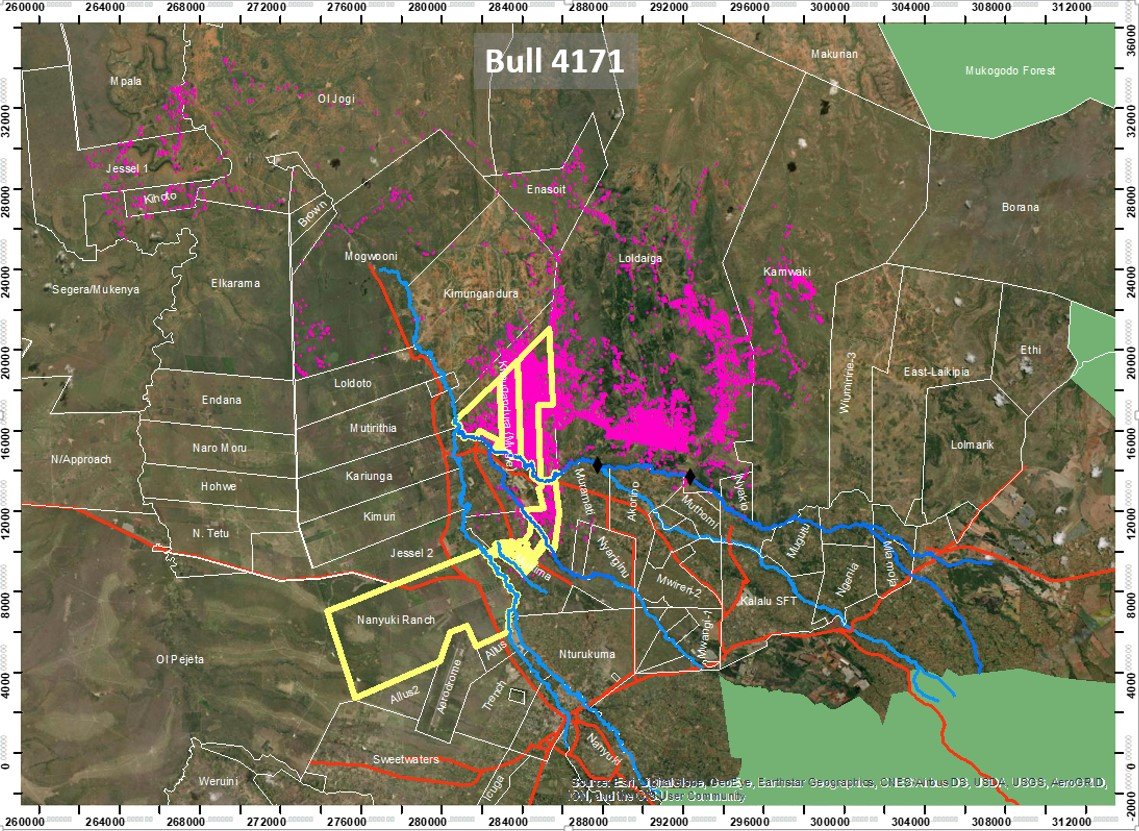
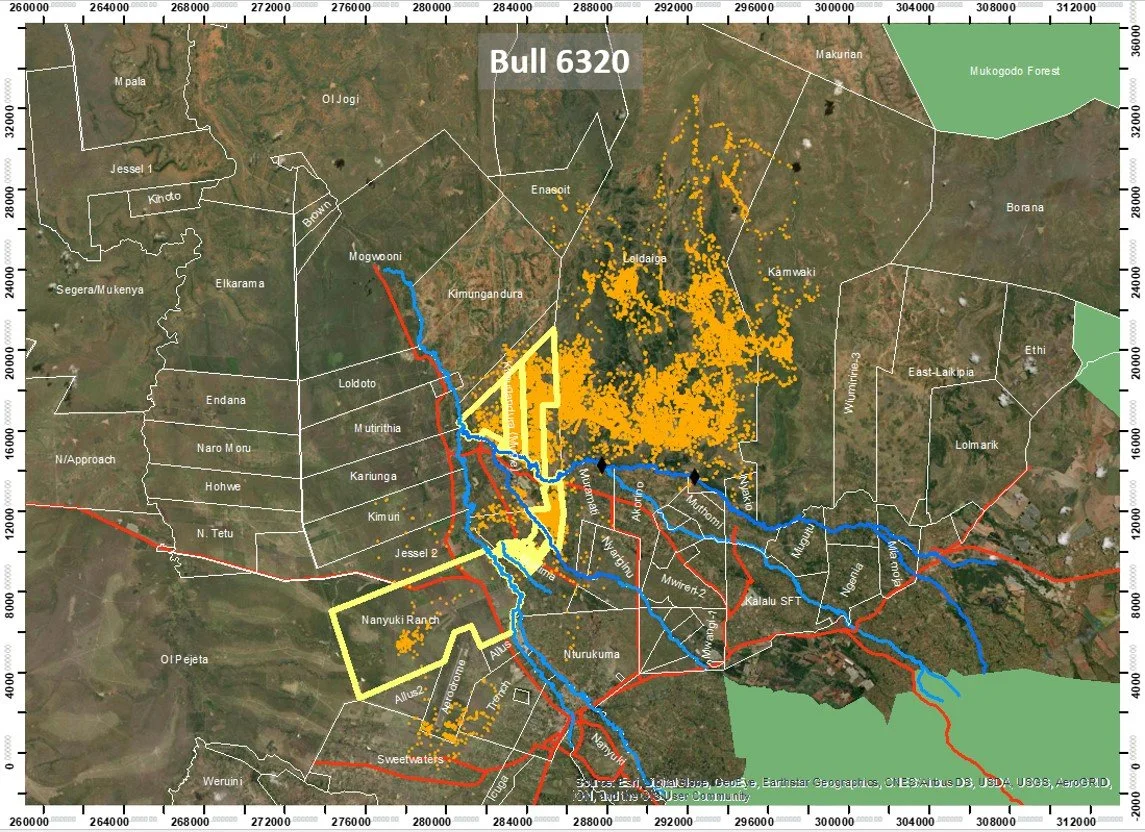
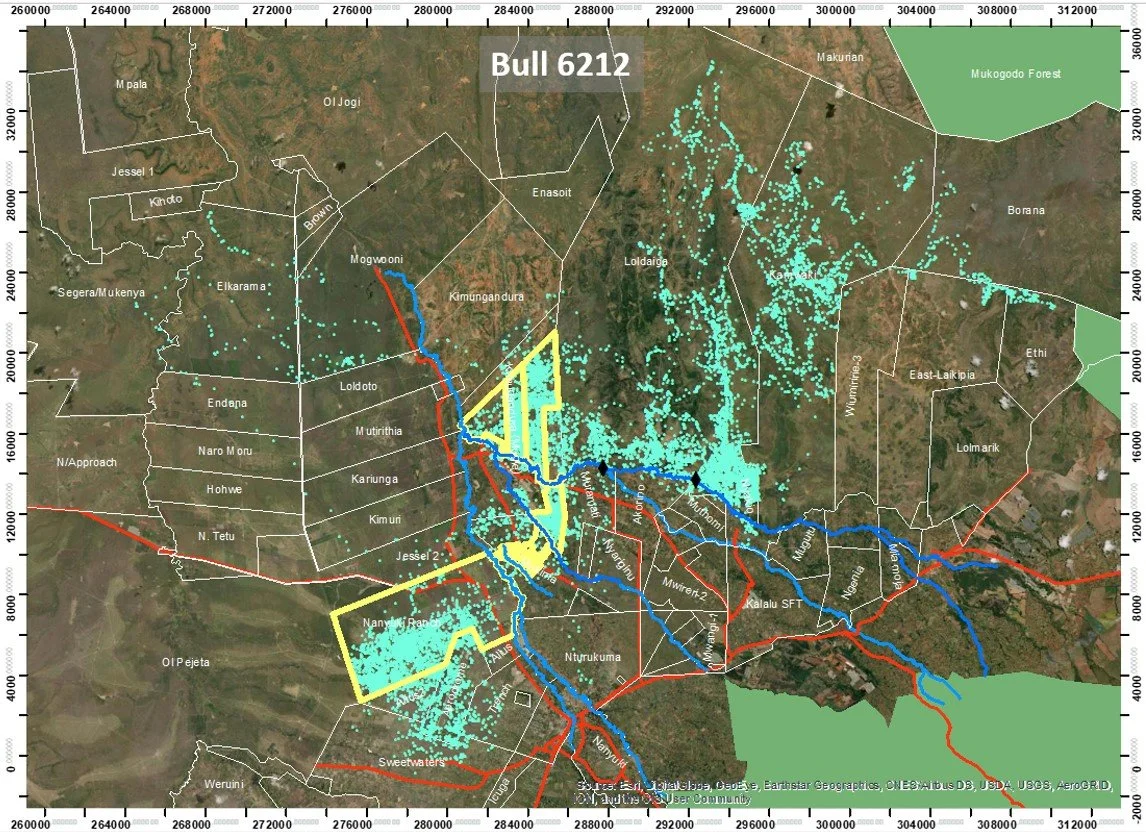
Fig 2: Elephant compatible & incompatible sub-division
SOLUTIONS
AN OPPORTUNITY FOR DONORS
As a strategic land-security intervention at the exact moment when donor capital can prevent irreversible habitat loss, stop the escalation of HEC, leverage private investment for conservation and create a scalable model for elephant range protection across Kenya
The remaining land on sale includes:
One parcel of 230 acres, and
Two parcels of 100 acres.
Securing the 230 parcel (long thin strip) ensures the ecological integrity of the ELDA and one of the 100 acre plot includes a watering hole.
WT seeks investors, in order of importance, to
1. Borrow funds (USD 1.8 Million) to acquire the 230-acre plot along the Muramati agricultural boundary, where HEC is high, to:
acquire the 230 acre plot,
fence its Muramati boundary to stop HEC,
subdivide it into 10 parcels of 23 acres,
develop a company under which the plots are sold to wildlife-compatible users, guided by conservation conditions:
pay a small monthly fee towards wildlife-proof fence maintenance along the Muramati boundary;
Construction footprint on maximum 2% of the land;
Construction respectful of neighbours and wildlife (no 2 stories, no noise,…)
Only wildlife permeable demarcators (ie. hedges) between parcels;
Off-grid water (rain-catchment) and electricity systems (ie. solar);
The sales price of the 23 acre parcels would include a USD 15,000 increment to cover the cost of fence installation and development of the company.
There is a much larger market of wildlife-friendly people able to invest USD 200,000 than of people able to invest USD 1.8 million
Parcels would be sold within three years, after which the philanthropist gets reimbursed the USD 1.8 Million.
2 Acquire a 100-acre plot with watering hole
One of the remaining 100 acre plots on sale has a large watering hole that is key to elephants and all other wildlife in the ELDA.
This would be a conservation investment of 100 acres at USD 800,000/acre.