

TIMAU RIVER wildlife corridor
(2020 - 2030 Project)
CHALLENGES :
Weak law-enforcement, compromised and understaffed WRUAs
Unscrupulous abuse of water and riparian protection laws
No river water downstream for many weeks every dry season,
Collapse of riparian vegetation due to water absence,
Collapse of ecosystem functions (water retention and run-off),
Severe erosion & sedimentation,
Loss of biodiversity,
Loss of wildlife habitat connectivity,
Unsustainable dry-season influx of livestock in the highlands - in search of water and grazing
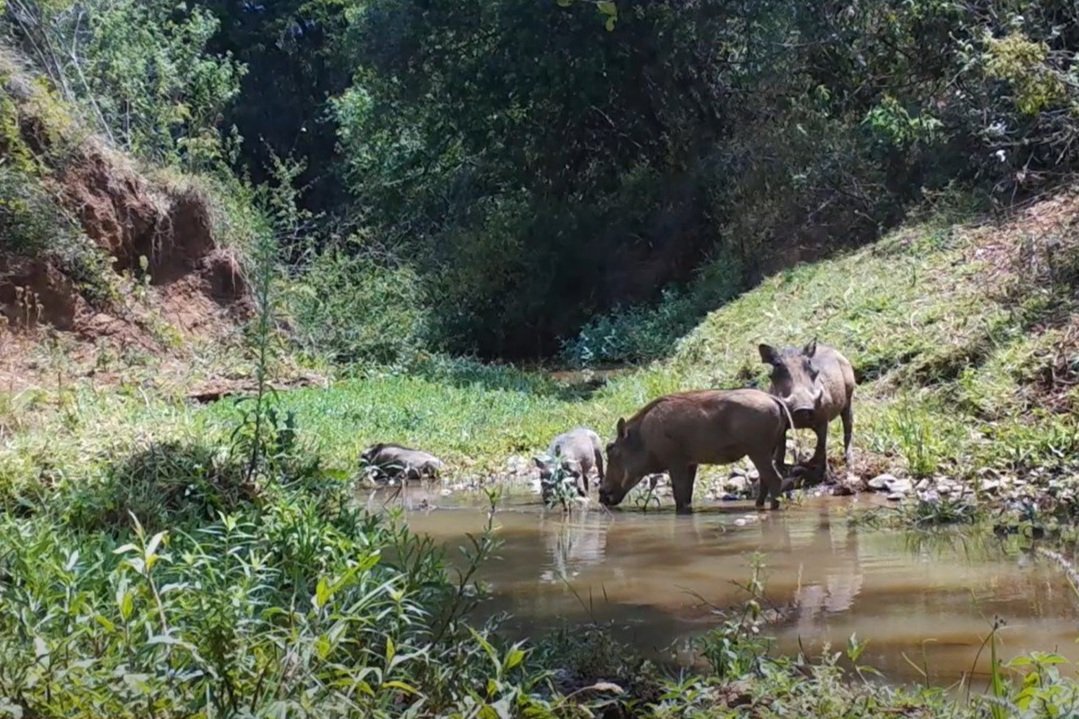
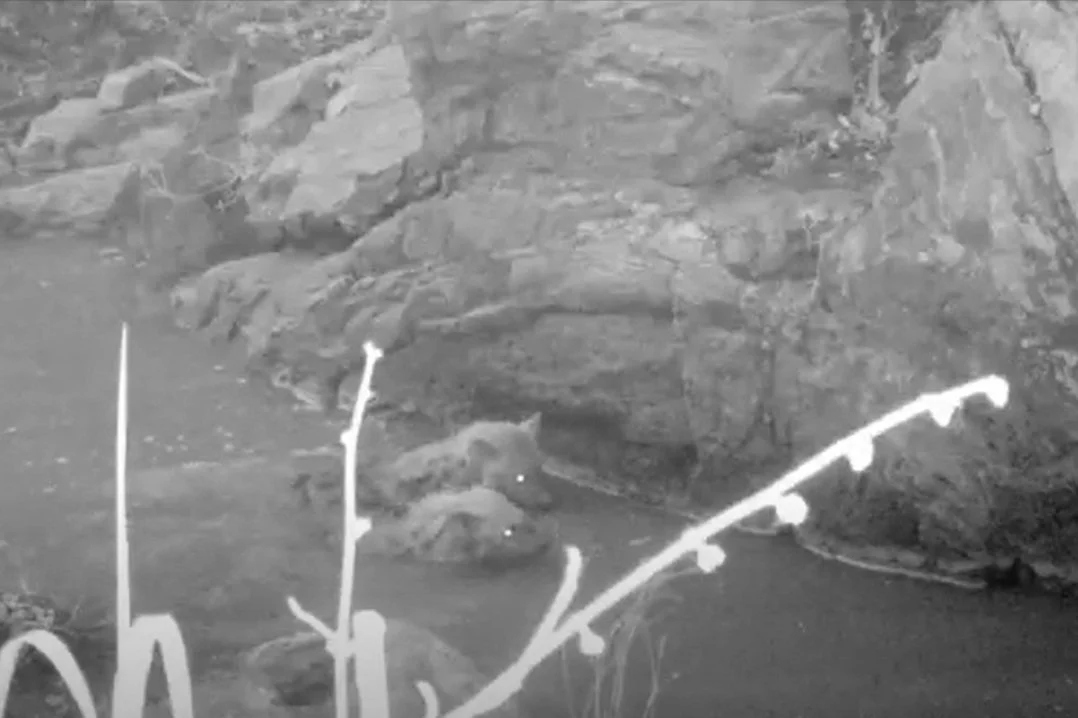
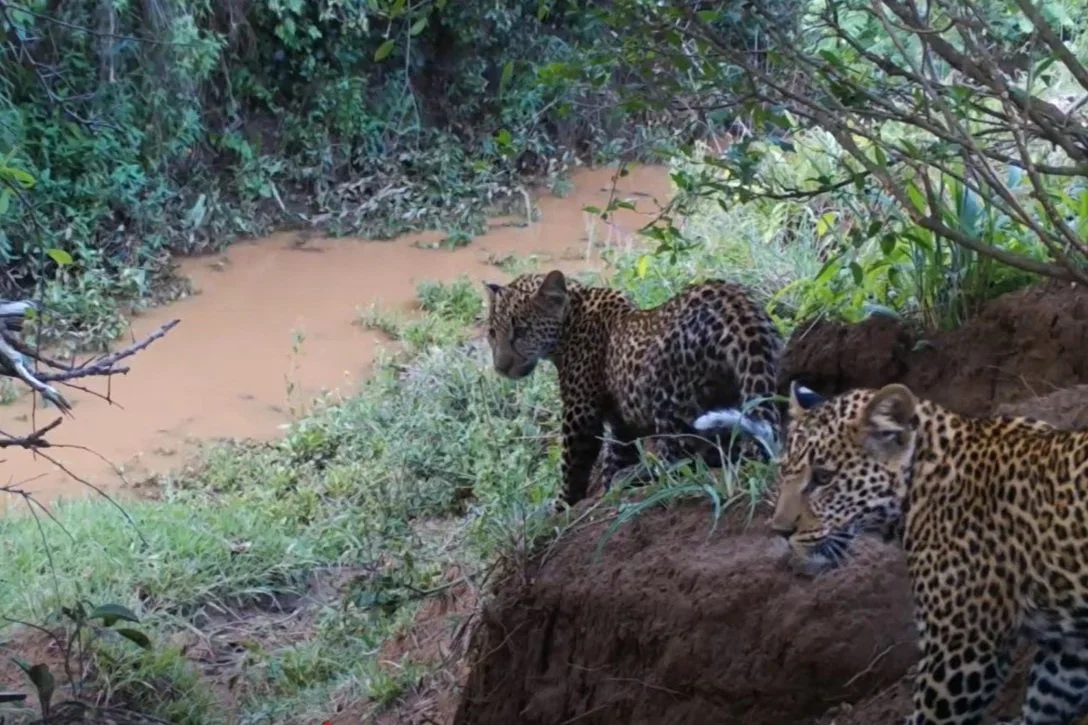
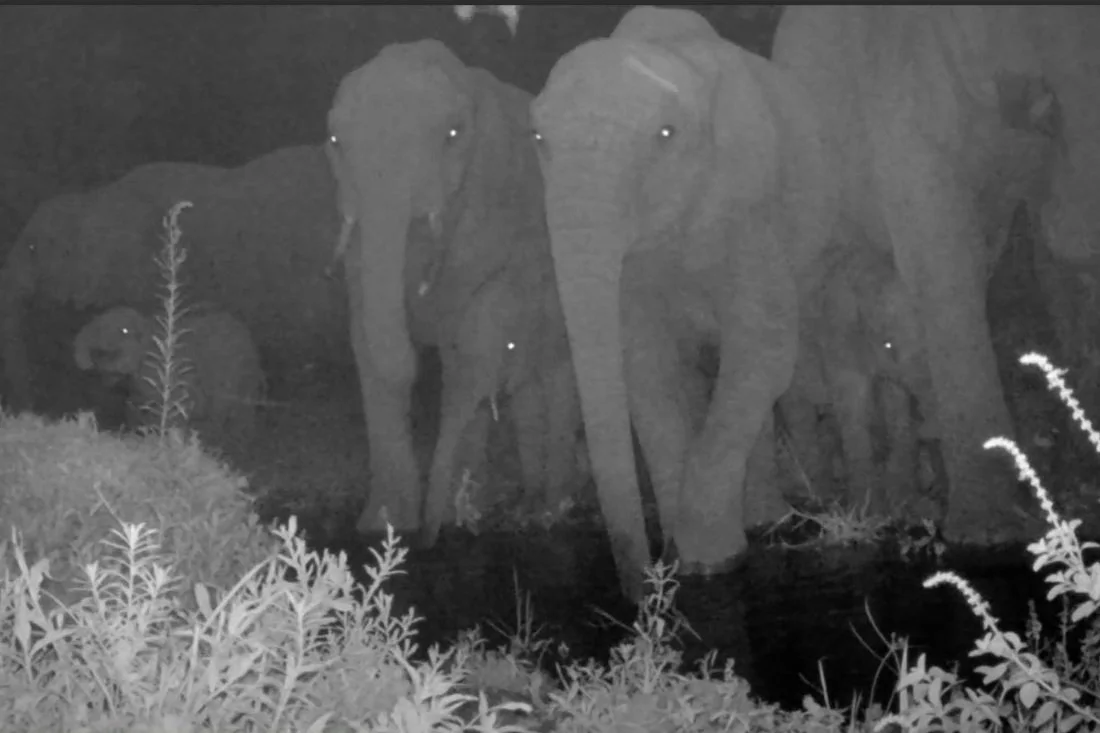
Timau River resident leopards, swimming (playing) hyena’s, warthogs and elephants
Over-Extraction of River Water
Mt. Kenya is under intense pressure from rapid population growth. Associated need of water has seen most perennial rivers become seasonal, standing dry for most of the dry seasons.
Water over-extraction has up to 90% of river water diverted before reaching Mt. Kenya’s lower park boundary.
96% of 259 water users on the Timau River are unmetered, 81% exceed authorized volumes, and 18 extract as much water as the other 241 combined (TRP, 2022).
The collapse of riparian ecoservices, such as rain and river water retention and runoff filtering, adversely affects all dependent life, including humans.
Legally, dry season abstraction is not allowed. Medium and large scale water abstractors need to leave 30% of water in the river and have sufficient storage capacity to operate for 100 days. Large abstractors are Commercial farms and community water projects (CWPs) in the upper zone. Few are metered and aside an annual extraction permit, nobody pays for volume of water (m3) used. Although that most large scale abstractors abide by the rules, some fill their dams in the dry season and CWPs have no storage.
The Water Resource Use Associations (WRUAs) in charge of implementing the regulations, are not remunerated and their only income is generated from selling more abstraction licenses of an already over-stretched river
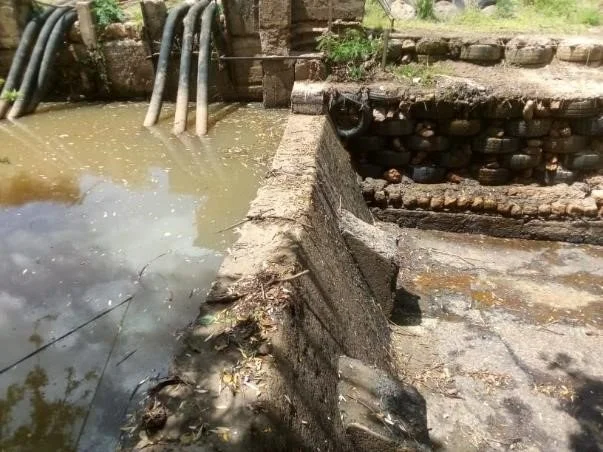
Timau River dry season water intake
loss of wildlife habitat
River water shortage contributes to lowland pastoralist driving thousands of cows to Mt Kenya each dry season. Livestock numbers on Mt Kenya increased tenfold between 2016 and 2020. The largest livestock influx comes from the Timau Basin in Laikipia;
The Timau Basin is the largest source of the Ewaso Ng’iro, traversing Laikipia and Samburu.
Riparian lands are legally protected, but suffer from illegal tree cutting, river sand harvesting, over-grazing and agricultural tilling. This destroys river ecosystem services at the detriment of all life depending on them.
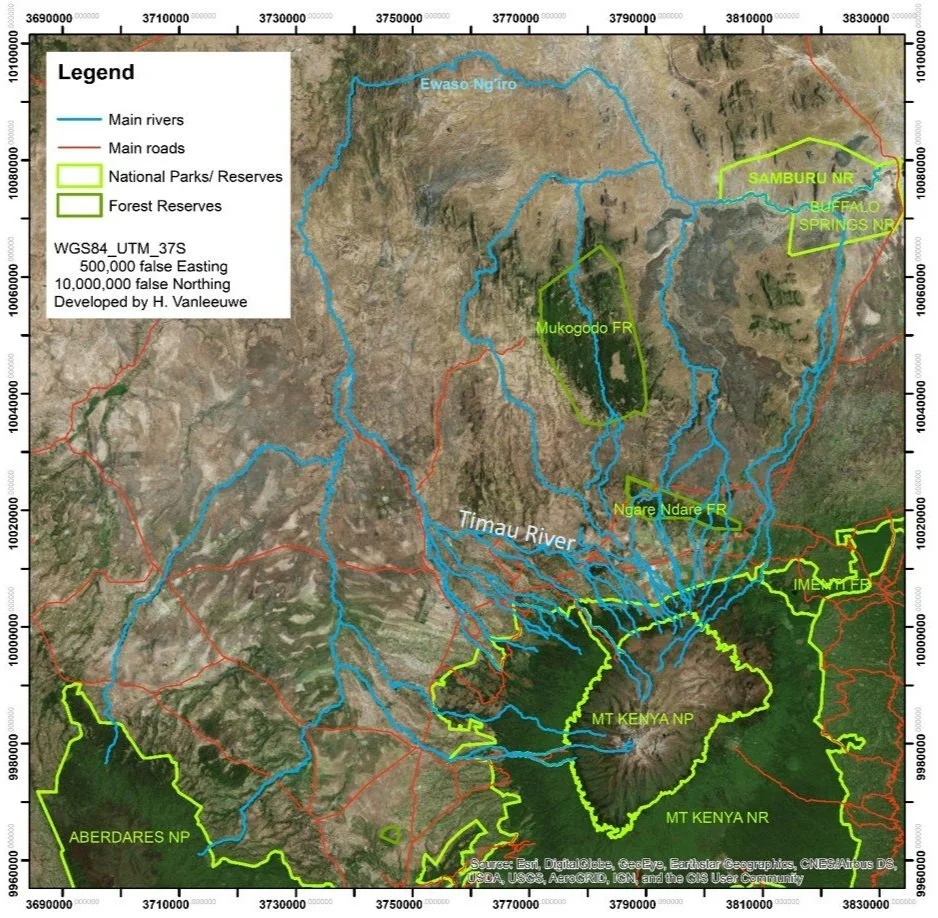
Mt Kenya, main rivers in the Laikipia/Samburu ecosystem and the Timau River, WT
The Timau Sub-Catchment
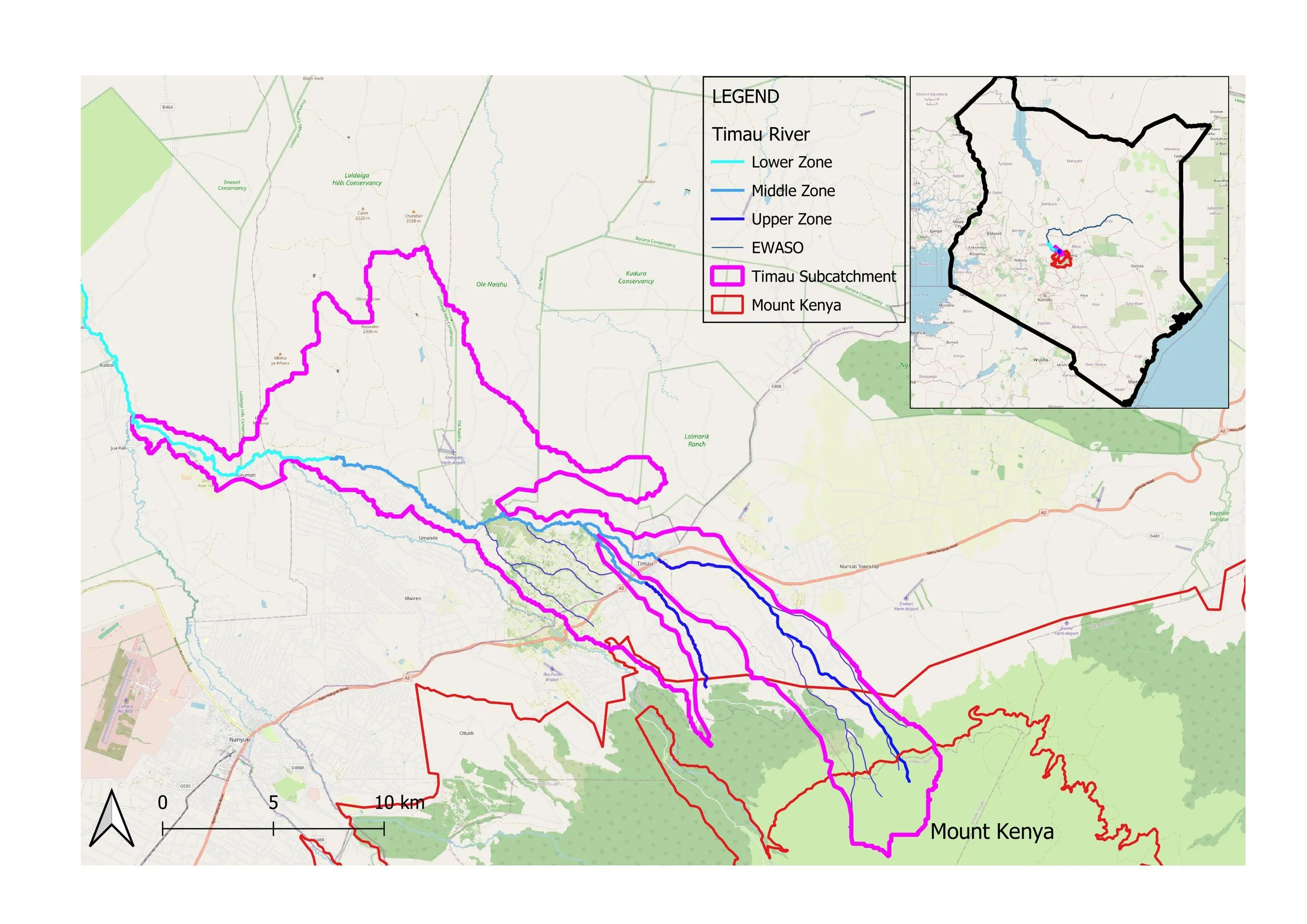
Riparian lands prior to human impact are biodiversity-rich and function as natural wildlife corridors and/or important wildlife dispersal areas. Many rivers naturally connect highlands to lowlands and are used/or offer refuge for migrating large mammals.
Protecting those rivers means protecting wildlife corridors and ecosystem services.
solutions
collaborative efforts,
Pre-2026
Between mid 2019 and 2025, the Disney Conservation Fund (DCF) for elephants, provided financial support to the Mt Kenya Trust and the Timau River Project for; planting, erosion mitigation, community sensitization, water capture & storage and patrolling activities on the Timau River.
In 2019 a workshop was held with Government authorities, Civil Society and Private partners to discuss the challenges of drying headwaters of the Ewaso Nyiro, due to over-extraction of water and riparian resources.
It was unanimously decided that reversing the decline of headwaters of the Ewaso Nyiro is key for the survival of wildlife and people.
To launch this massive task, one river in the Timau Basin, -from where most livestock is driven onto Mt Kenya in dry seasons, would be chosen as a pilot project. The project would test recovery efforts and safeguarding actions, of which the solutions with the best conservation outcomes, will be scaled to other headwaters.
In 2020, to identify which river will represent the pilot project, a riparian land-use survey ensued of the five important rivers in the Timau Sub-Cathment (TSC): Sirimon, Teleswani, Ontulili, Timau and Nanyuki Rivers.
The Timau River stood out for its richness in animal and tree species
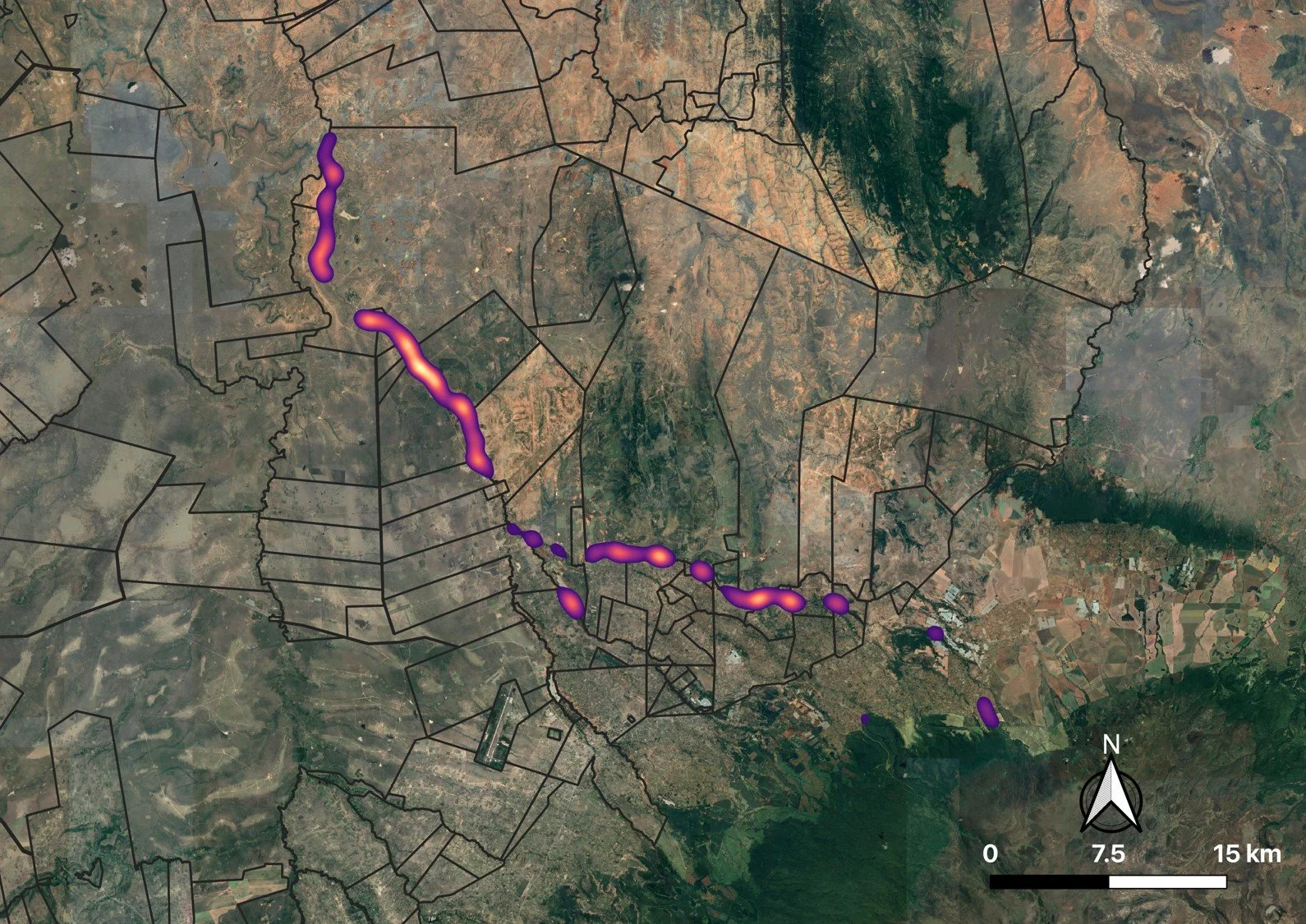
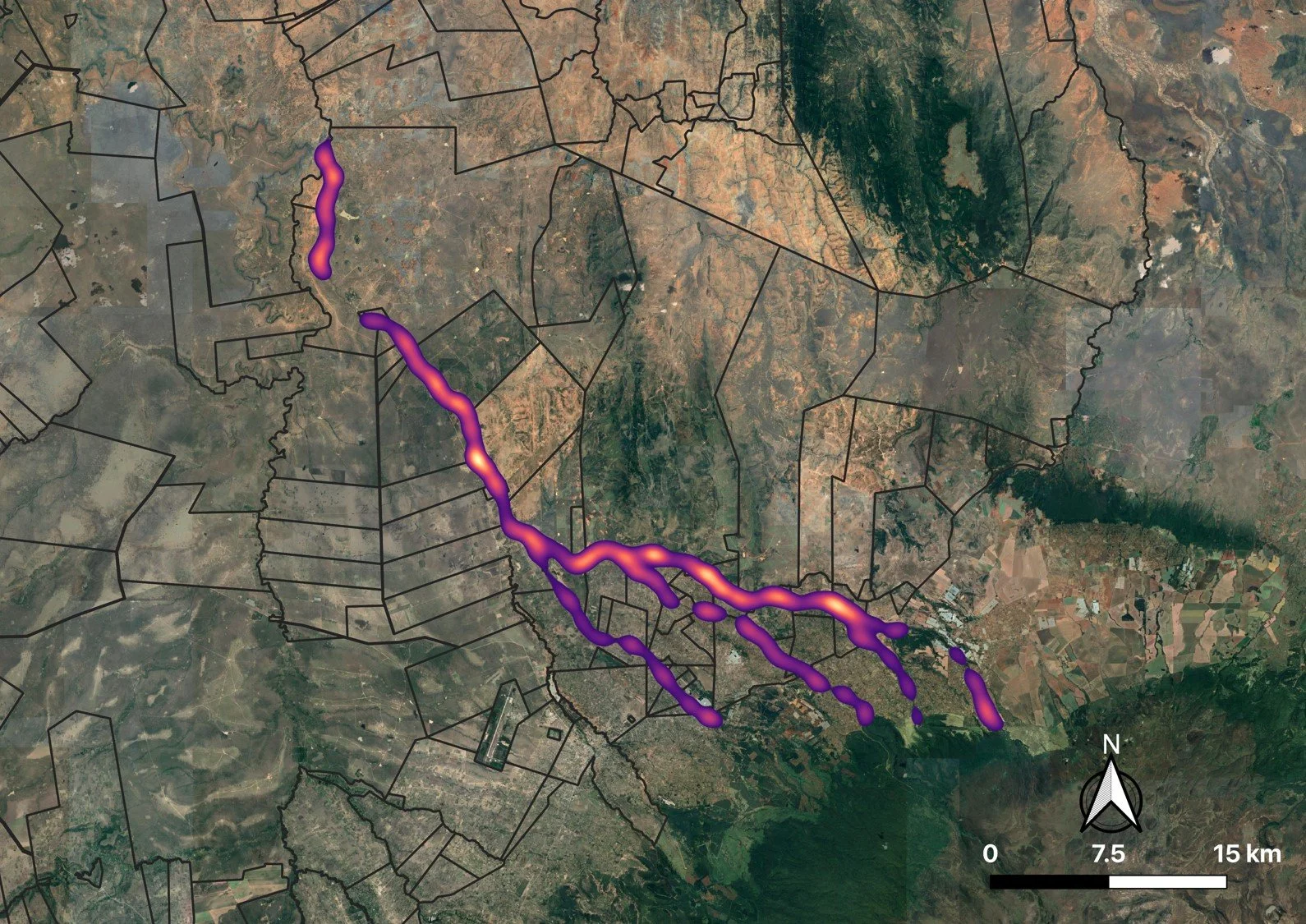
Timau River animal species richness, 2020
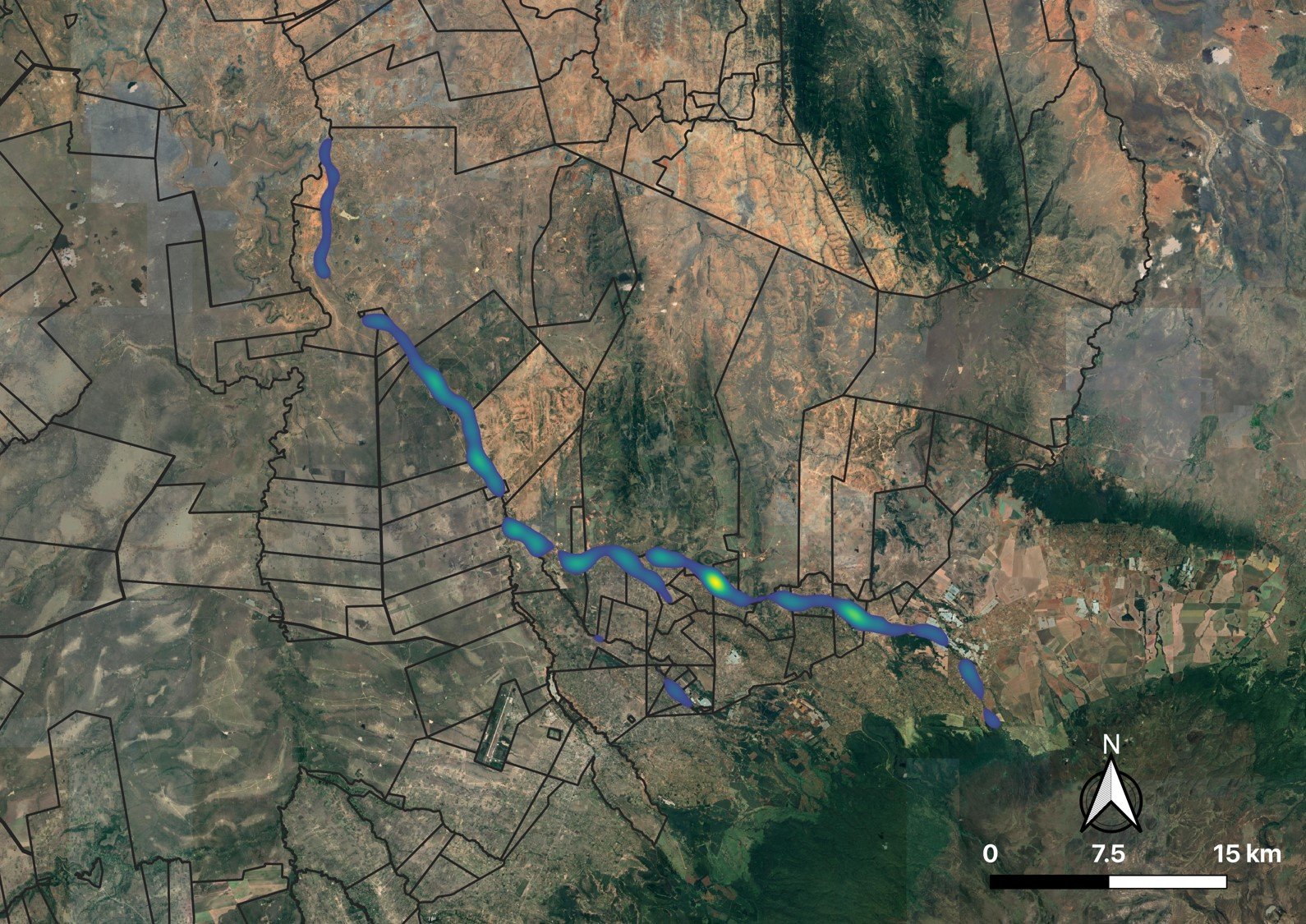
Timau River bird species richness, 2020
Timau River tree species richness, 2020
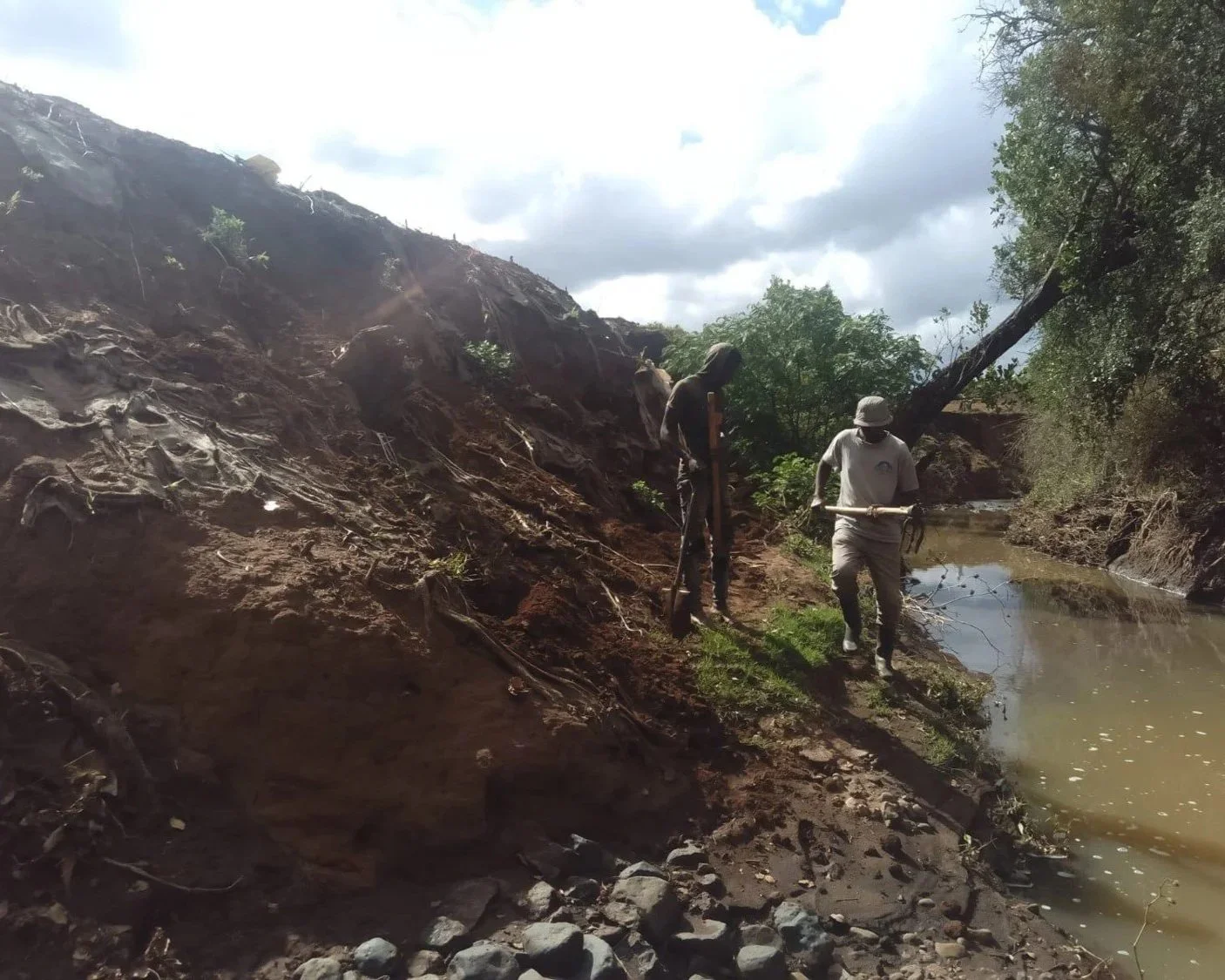
Bank restoration
collaborative efforts,
POST-2026
In 2026, Wilderthings developed a MoU with the Timau River Water Resource Use Association (WRUA) to safeguard the river, through:
Joint patrols, Wilderthings/WRUA
Regular joint patrols enforce riparian rules and regulations, curbs illegal tree cutting for timber, fuelwood and charcoal and river water abstraction.
Tree planting & mitigating erosion
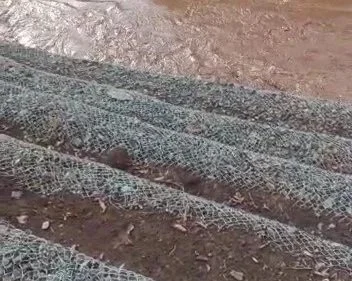
In dry season WT employees identify areas of severe erosion, and restore/ stabilize the riverbanks using gabion sausages. These are 17m long nets filled with stones and earth (allowing grasses and other plants to develop their roots). When erosion is extensive several of those sausages are stacked on top of one another (pics).
In wet seasons, water levels can be high and further restoration work is then focused on planting of grasses and trees in degraded areas.
Monitoring with camera traps
Several camera traps have been installed along the river to monitor wildlife occupation.
The African clawless otter (Aonyx capensis) is an excellent indicator species for river health, because it is water dependent. It is listed as Near Threatened on the IUCN Red list and rapidly declining due to habitat loss. This is exactly the case with otter on the Timau river. Their frequency and abundance over time, as monitored by camera traps, will indicate ecological status changes of the river.
Incentivising riverine communities to plant woodlots, capture and store rainwater
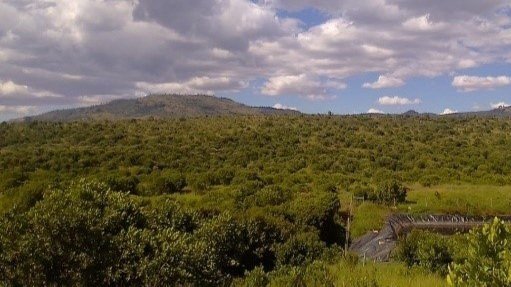
WT supports the development of woodlots on farms to remove the need to cut riparian trees for fuelwood. We also supports capturing and storing of rainwater from roofs, and by digging shallow ditches on sloping land to slow water run-off (see picture)
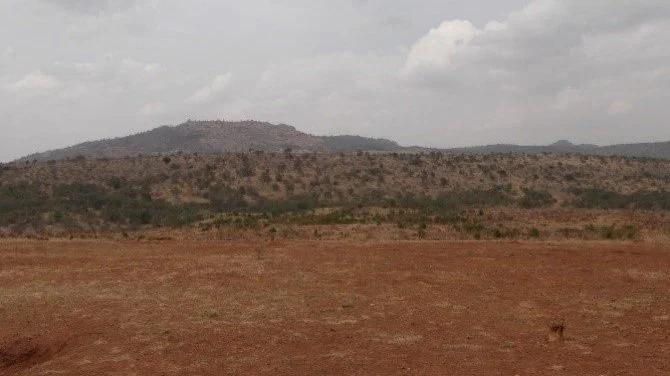
Overgrazed land BEFORE trapping runoff water
The same land AFTER introducing grazing schedules to avoid over grazing and shallow ditches trapping rain water
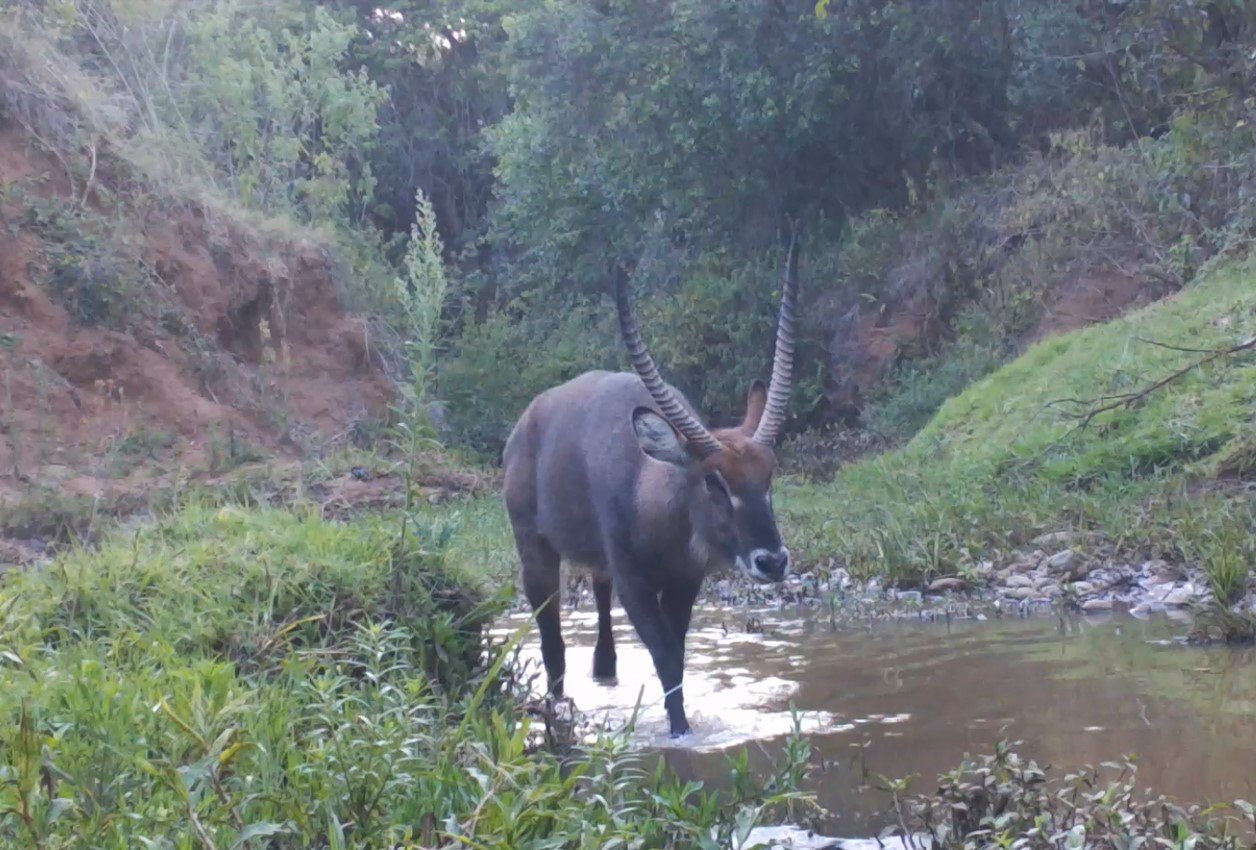
Resident waterbuck
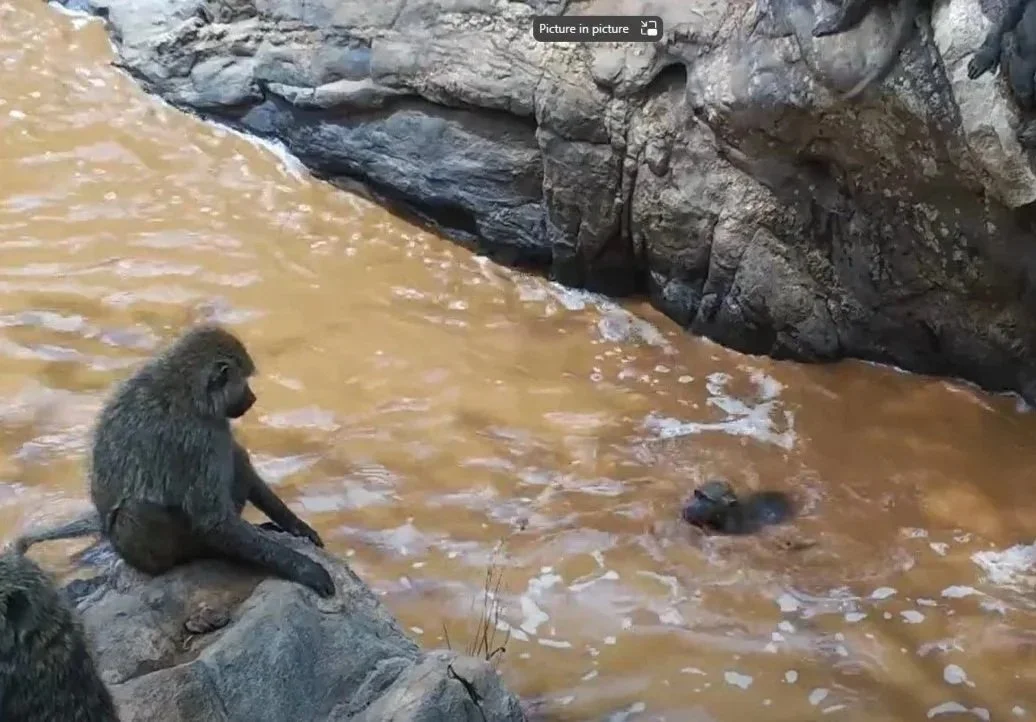
Swimming baboons