

Imenti Elephant Corridor
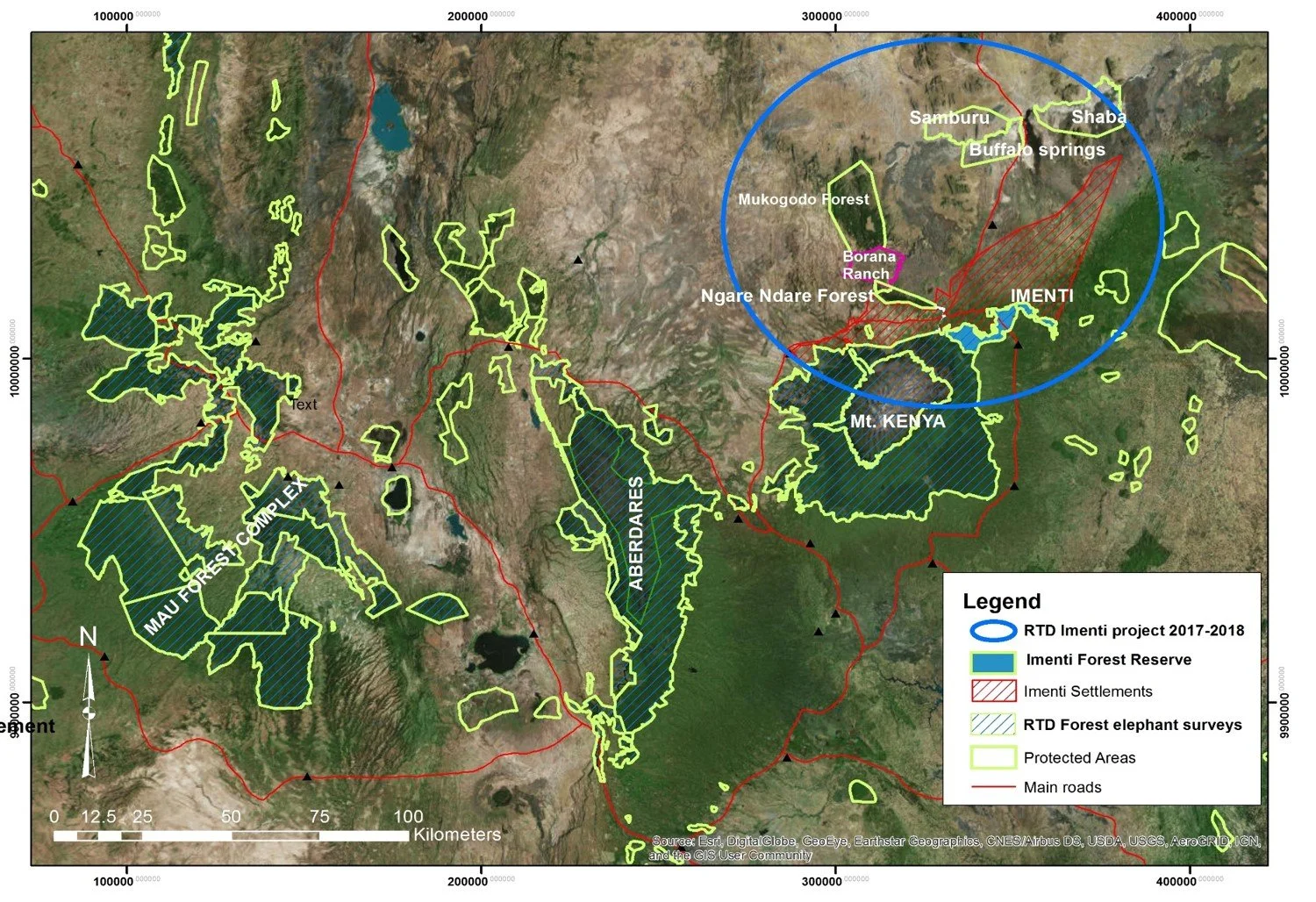
Kenya’s 3 water towers and project area
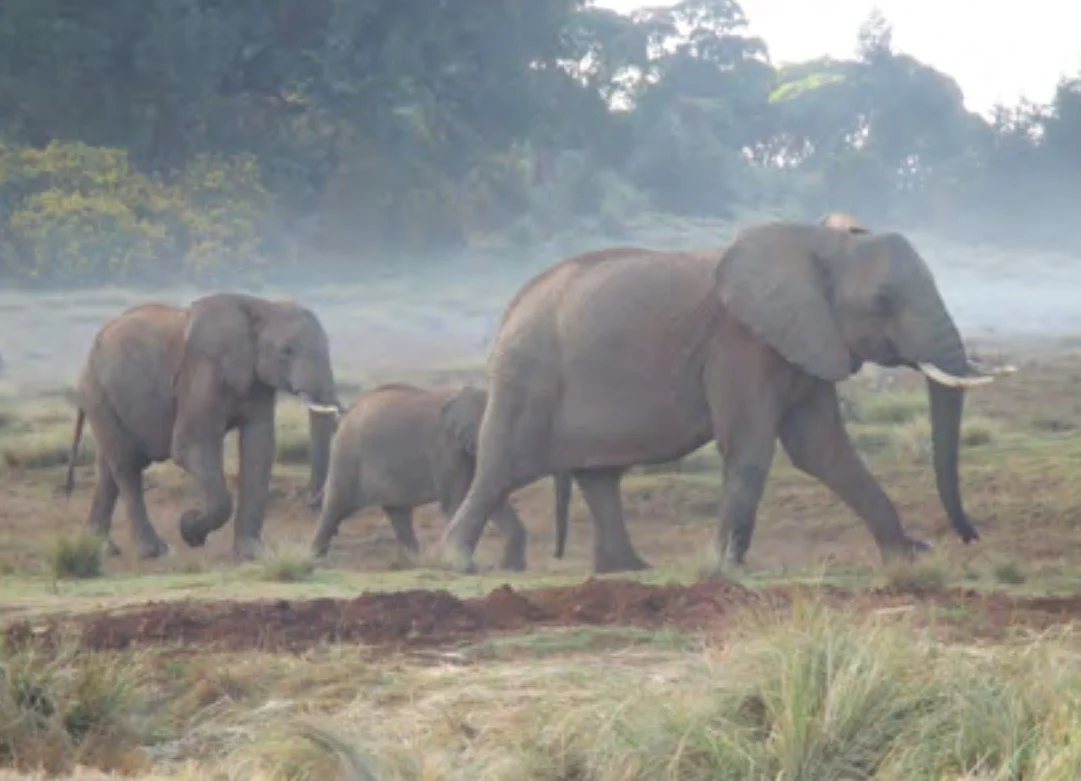
Elephants on Mt Kenya
challenges
Mt. Kenya supports a large elephant population and is surrounded by small-scale farms and settlements disrupting ancient migration routes.
Surveys show abundant signs of elephants and humans in the Imenti Forest, northeast of Mt. Kenya, resulting in intense Human-Elephant Conflict (HEC).
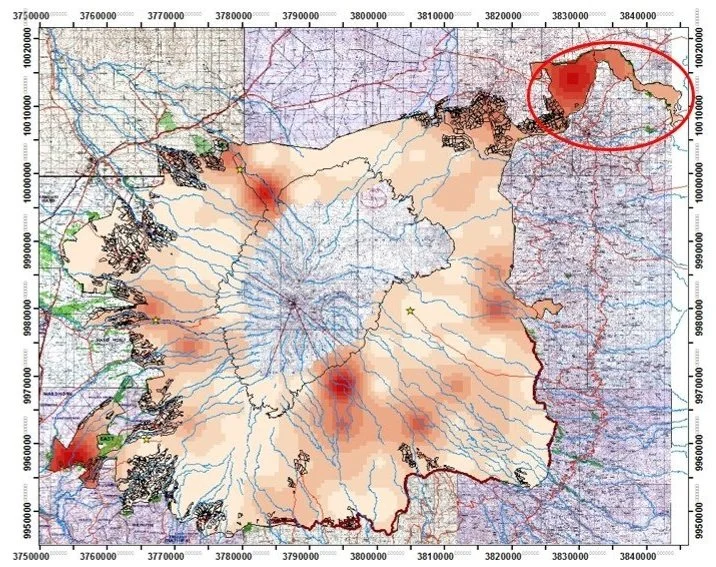
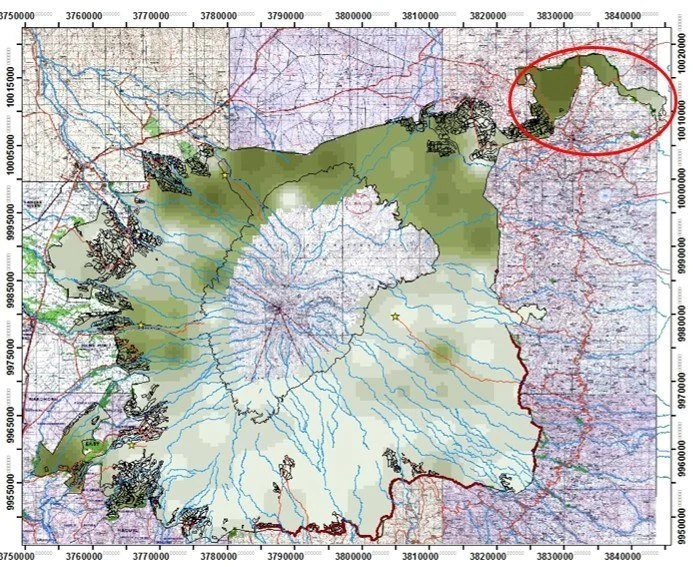
Human (red) & elephant sign (green) distribution on Mt Kenya and Imenti forest (red circle)
Necessity of fencing:
To mitigate HEC, the Kenya Wildlife Service (KWS) and Rhino Ark Charitable Trust (RA) fenced the Imenti Forest. However, this does not stop historic annual elephant migrations between the Northern rangelands and the Imenti. The boundary fence stops migrating elephants causing more HEC at the fenced boundary by elephants trying to enter the Imenti.
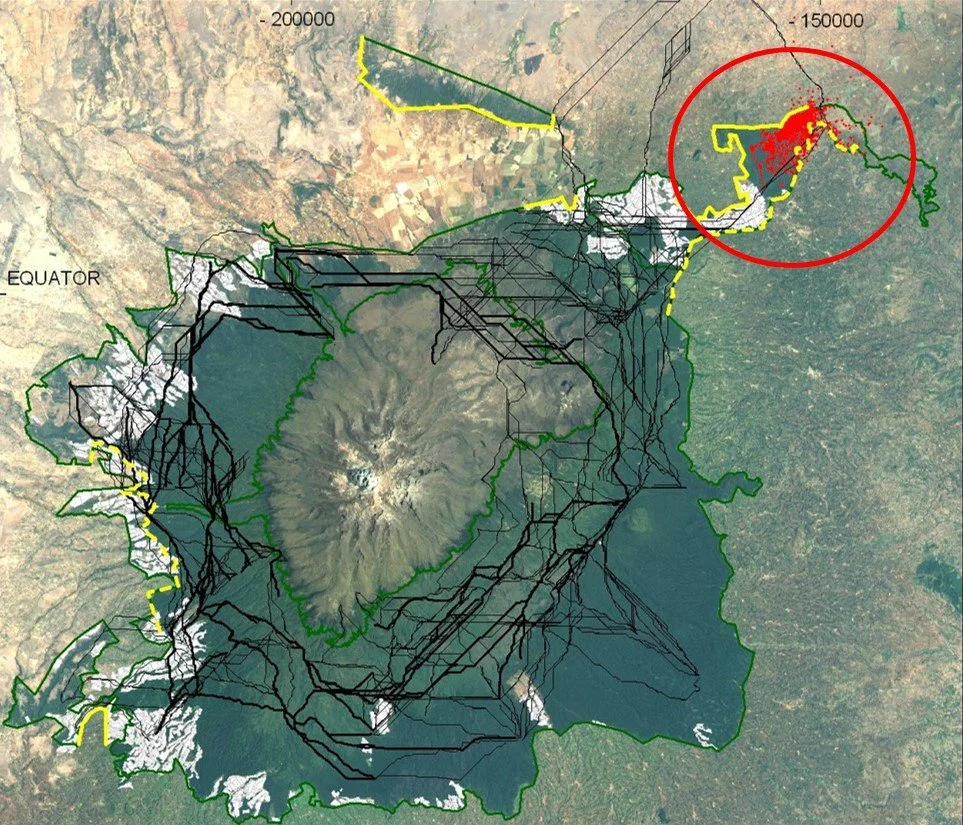
Elephant travel routes (black lines) vs plantation blocks (white)
The Imenti is small and degraded, unable to sustain elephants for long.
To return to the Northern rangelands, elephants can only use the existing fenced corridor connecting Mt. Kenya to the Ngare Ndare Forest.
To use the existing corridor elephants need to cross a narrow strip of plantation blocks that often cause movement obstruction, a bottleneck.
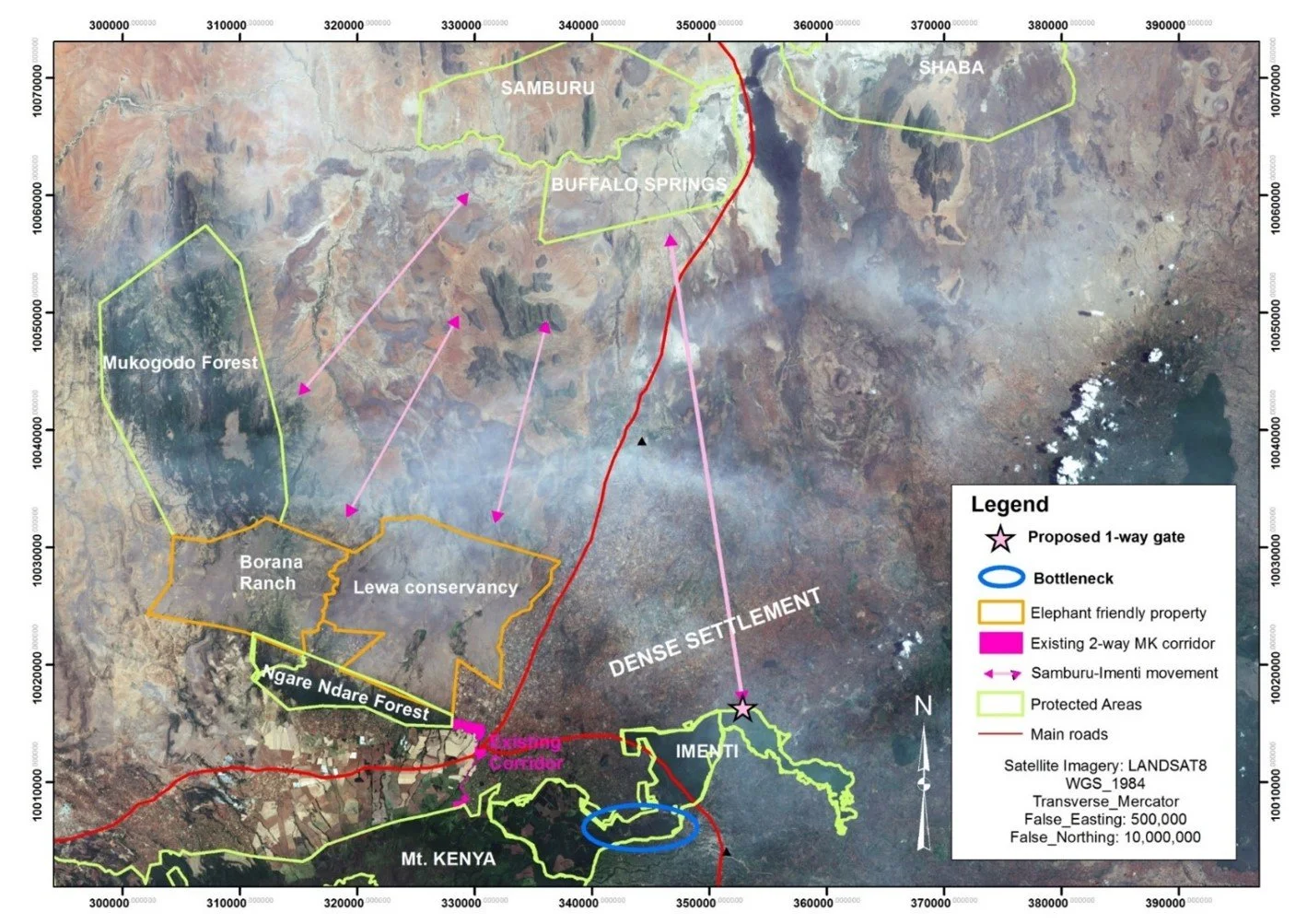
Elephant migration patterns and bottleneck between Imenti and Mt Kenya (blue circle)
Elephants are smart and have learned to use roads that traverse the Imenti, which represent holes in the boundary fence, to exit and raid crops.
People also use these roads to access the Imenti for livestock grazing and illegal tree cutting.
solutions
To address repeated boundary fence breaches and HEC by migrating elephants from the northern rangelands trying to enter the Imenti several steps were taken:
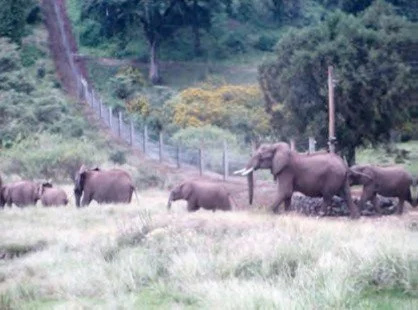
Existing Mt. Kenya - Ngare Ndare - Northern Rangelands corridor
Rhino Ark (RA), Mt Kenya Trust (MKT) and WT walked the Imenti boundary and used historical elephant tracking data from Save The Elephants (STE) to locate the most frequent entry points. They suggested installing a gate to let elephants in!
Farmers opposed a two-way gate fearing crop raiding elephants, and the novel concept of a one-way gate was developed.
RA and MKT built a 60m wide funnel in the boundary fence, leading to a 6m wide gate. Using a smart technology, an elephant recognition device allows the gate to open only one way to let them in.
The one-way gate reduced intense HEC to virtually none at the boundary. MKT created a ranger outpost near the gate for interventions if need be.
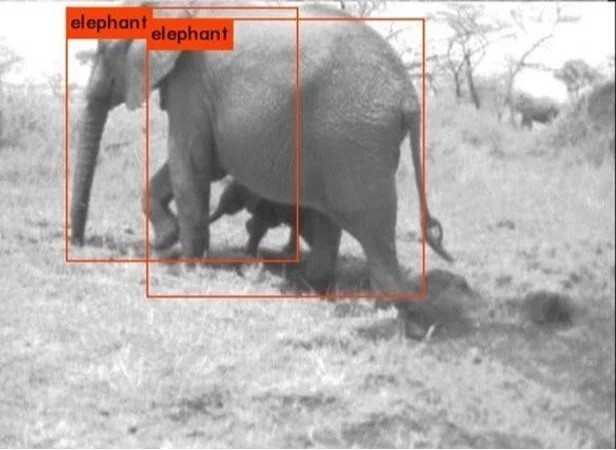
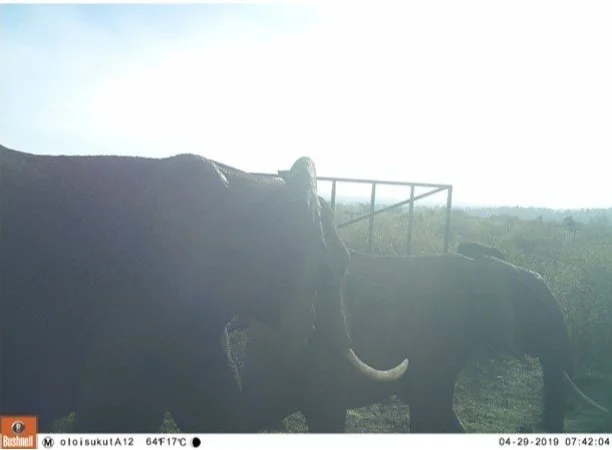
One-way gate elephant identification, gate opening only one way, MKT/RA
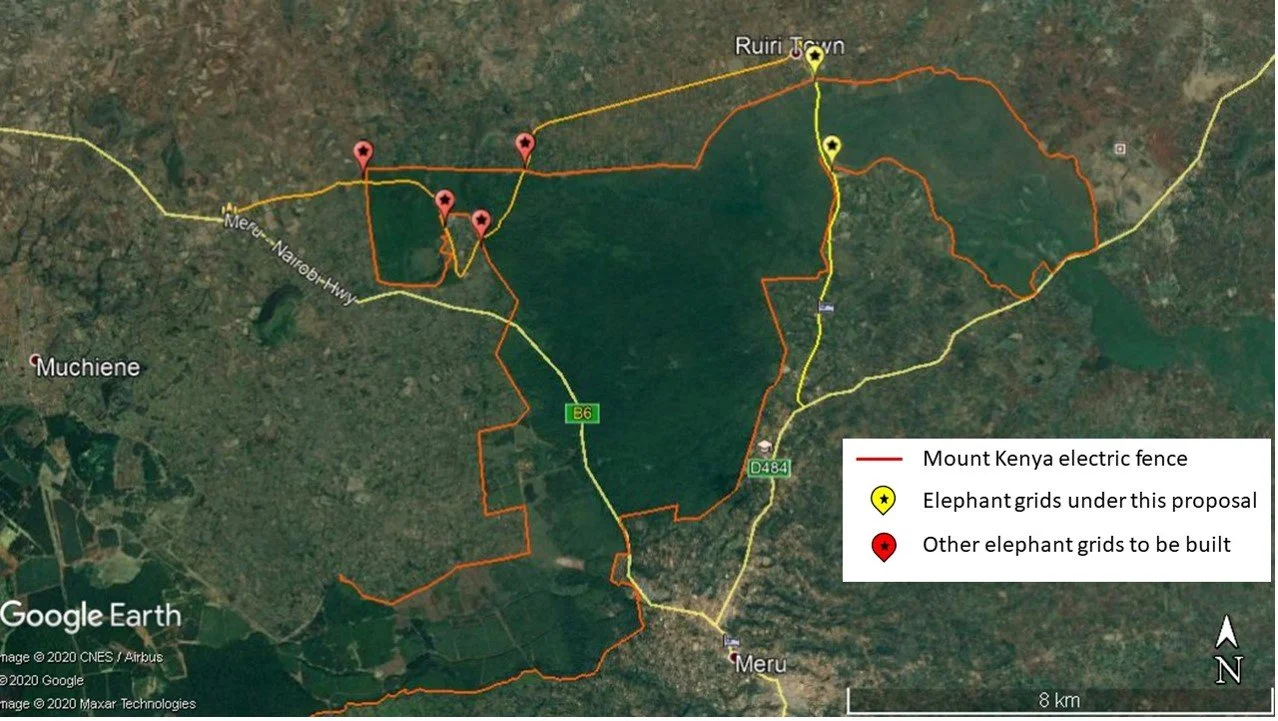
Roads with- and needing- cattle grids, RA
RA installed several road cattle grids to prevent elephants from using roads to exit the Imenti and raid crops.
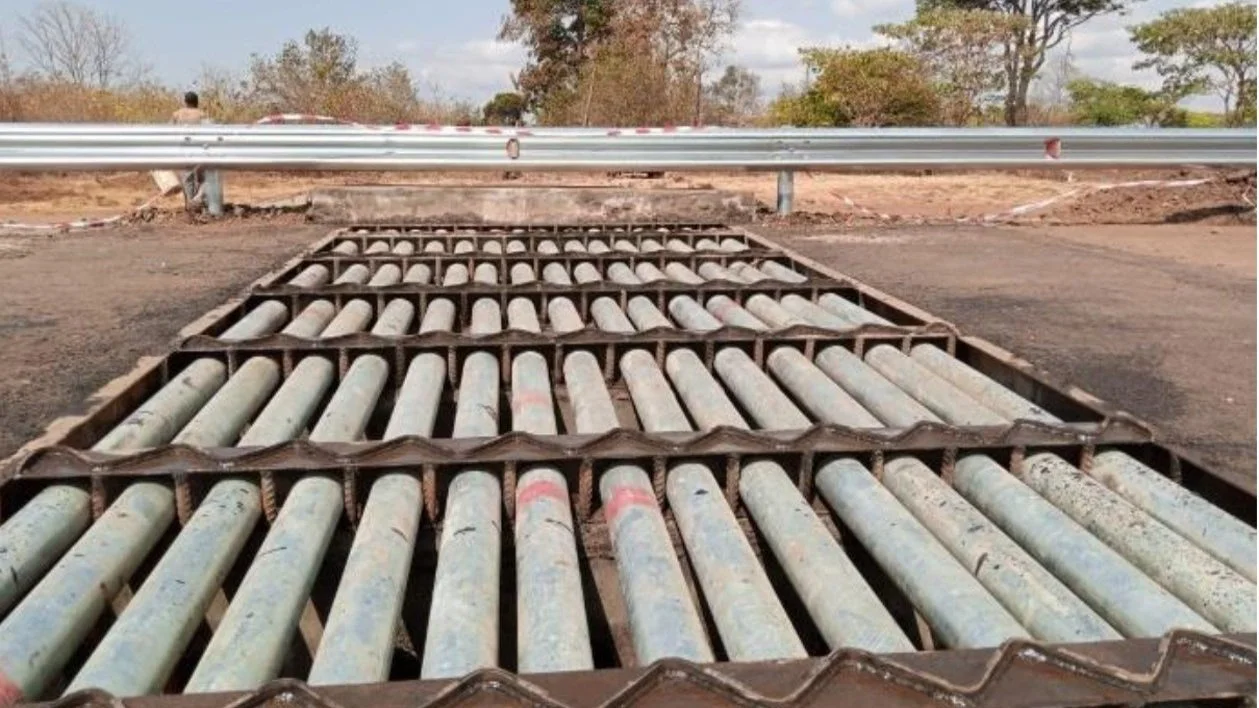
Road cattle grid Imenti, RA
The main road needs fencing on both sides using an elephant underpass for safe wildlife crossing, mirrored on the existing Mt Kenya corridor.
WT continued support:
WT aims to raise funds to support:
RA installation of remaining road grids
Contribute to the RA installation of the road underpass
Work with KWS, KFS and other partners to resolve migration blockages in the narrow strip of tree plantations linking Mt. Kenya to the Imenti.